
July 4th 2026: The Family Reunion Test — When Everyone's Together, What to Watch For
Last Reviewed by Austin Adair · July 2026
On July 4th 2026 the whole family was together for the first time in months — and you're not sure Mom or Dad is doing as well as everyone pretends.
This guide gives you a reunion-day audit, summer-safety checklist, conversation scripts, and 2026 Southeast Michigan home care costs before everyone scatters.
It also covers what home care actually costs in Southeast Michigan in 2026, and how fast a caregiver can be in the house before you fly home.
7 min read · Published 4th of July week, 2026
Who this guide is for: Adult children and siblings who spent the 4th of July with aging parents in Southeast Michigan — often the one weekend a year the whole family is in the same place to compare notes.
The Reunion Audit — Four Places to Look
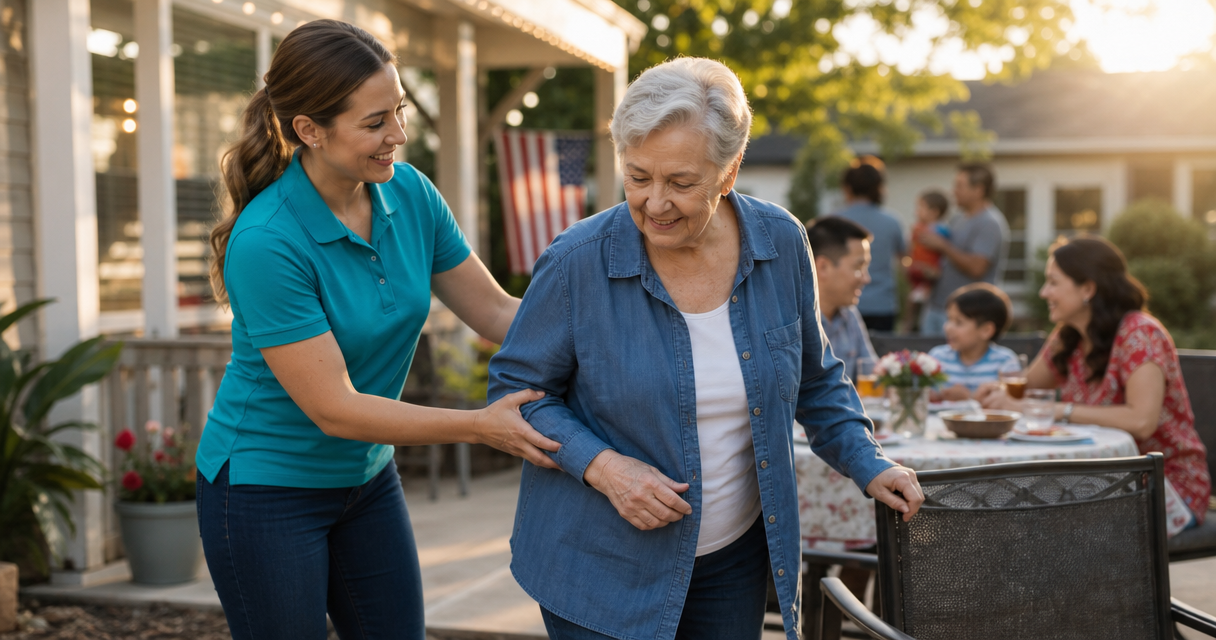
The 4th of July is the one weekend everyone sees Mom and Dad at once. Use it. Spend 20 quiet minutes looking — really looking — at four specific places before the cars start pulling out.
At the cookout
Mom or Dad pushes food around the plate, refuses to sit outside in the heat, needs help up from a lawn chair, or seems unsteady carrying a paper plate across the yard. Watch the appetite — significant changes since last year often precede a bigger health event.
In the house
Expired food in the fridge, scorched pots, prescription bottles you don't recognize, missed doses in the pill organizer, loose throw rugs, dim hallways, and a recliner that has clearly become the center of life.
On the drive
Dad takes wide turns, brakes late, drifts in the lane, or can't find a familiar address. Look at the car: fresh scrapes on the bumper or mirror that no one wants to talk about. An expired license tucked in the visor is its own answer.
In the group photo
Visible weight loss compared to last year's 4th of July photo, stooped posture, vacant expression, or standing apart from the group. Photos lie less than memory does — pull up last summer's shots on your phone and compare side by side.
The "two-or-more" rule
A single sign on this list is rarely a crisis. Two or more is a pattern. Six months from now, looking back on this weekend after a fall or an ER visit, the signs will feel obvious. They are obvious today, too — most families just need someone to say it out loud over the leftover coleslaw.
Summer Safety for Aging Parents
Southeast Michigan summers hide four warm-weather risks families routinely underestimate every July: dehydration from air conditioning, medication interactions with heat, holiday-crowd disorientation, and driveway or garage falls after long car rides. Each is preventable when someone spots the early signs.
Heat stroke and dehydration in adults 65+
Older adults sweat less, feel thirst less reliably, and overheat faster than the rest of the family realizes. Confusion, slurred speech, hot dry skin, a rapid pulse, or a sudden headache during a backyard party are not "just the heat" — they are early warning signs of heat illness that needs cool air and water immediately.
Medication and heat interactions
Diuretics, blood-pressure medicines, antidepressants, and some dementia medications can all raise the risk of dehydration, dizziness, or sun sensitivity. Before the next heat wave, ask the pharmacist to do a quick review of every bottle on the shelf — this is a pharmacy question, not a home-care one.
Fireworks, dementia, and Vietnam-era veterans
Loud booms after dark can trigger agitation, sundowning, and flashbacks for parents with dementia or combat history. Plan a quiet room with a TV, close the blinds before dusk, and have someone they trust nearby. The fireworks display will end. The agitation can last for days.
Pools, travel, and unfamiliar homes
Cognitively impaired adults wander toward water without realizing the risk, and an unfamiliar guest bathroom at a grandchild's house at 2 a.m. is a fall waiting to happen. If the holiday plan includes overnight travel, pre-walk the space and put a baby monitor in the guest room.
Before Everyone Leaves — Three Scripts
The hardest conversation of the year is the one where the whole family has to agree on what comes next. These scripts get you to a real plan before the cars are loaded.
When a sibling says "Mom and Dad seem fine to me"
Try: "I hope you're right. Can we agree on what would change our minds? A fall, a missed medication, weight loss? I'd rather we decide together this weekend than three siblings on a conference call after an ER visit."
When Dad says "I don't need a stranger in my house"
Try: "Dad, I hear you. What if it wasn't about you at all — what if it was about Mom getting a few hours off, or me sleeping better? We can start with two visits a week and stop anytime. No commitment."
When the family agrees something's wrong but no one lives nearby
Try: "We don't have to figure out everything tonight, but we shouldn't leave town without a plan. Let's pick one local agency to call this week, get a free in-home assessment on the calendar, and split the follow-up so nobody is doing this alone."

Send the group text within 48 hours
Before everyone scatters Monday morning, send siblings a short factual text — what you saw, not how you felt. "Dad lost about 12 pounds since Christmas, drove through a stop sign on the way to the store, and gripped the porch rail twice walking inside" lands much better than "I think Dad needs help." Facts open conversations. Feelings start arguments.
What "Help" Can Look Like by Monday
The numbers below are 2026 Michigan industry averages — what families across Oakland, Wayne, and Macomb counties typically see when they price the market. They are not our exact pricing, and your actual rate depends on hours, care level, and location.
Companion Care
Light housekeeping, meal prep, grocery runs, medication reminders, and someone in the house. Companion care is best when Mom and Dad are mostly independent and the small things are slipping.
2026 Michigan industry average
$27–$32 / hour
Personal Care
Bathing, dressing, mobility support, transferring, and incontinence care — alongside everything companion care covers. Personal care is the right level after a fall, a hospital stay, or when bathing has become unsafe in summer heat.
2026 Michigan industry average
$29–$37 / hour
Live-In Care
Live-in care places a caregiver in the home overnight, with their own private bedroom and 5 hours of uninterrupted sleep. Best when nighttime is the hardest part — fireworks anxiety, wandering, or the worry of being alone.
2026 Michigan industry average
$400–$500 / day
Want a number tailored to your parent's situation? Try our free 2026 cost calculator — it takes about two minutes.
FAQ
July 4th 2026 — Common Questions
The questions adult children ask most after spending the holiday with aging parents
Where Families Go Next
My Parent Just Fell
What to do in the first 72 hours after a fall — and how to keep it from happening again.
Talking to Aging Parents
Scripts and frameworks for the conversations no one wants to start.
Signs It's Time for More Help
A clear-eyed framework for deciding whether now is the right moment to act.
Scheduled Respite Care Near You
Find respite & caregiver relief services in specific communities across Southeast Michigan.
Exploring All Your Options?
Wondering if Mom or Dad should stay home or move to assisted living? See a side-by-side comparison built for 2026 Southeast Michigan families.
Don't Wait for the Fall to Be the Reason You Called
Call us for a free, no-pressure conversation. We'll listen, answer your questions, and help you figure out whether — and when — Mom or Dad is ready for a little help at home.