
Specialized Care
Post-Surgery Recovery Home Care
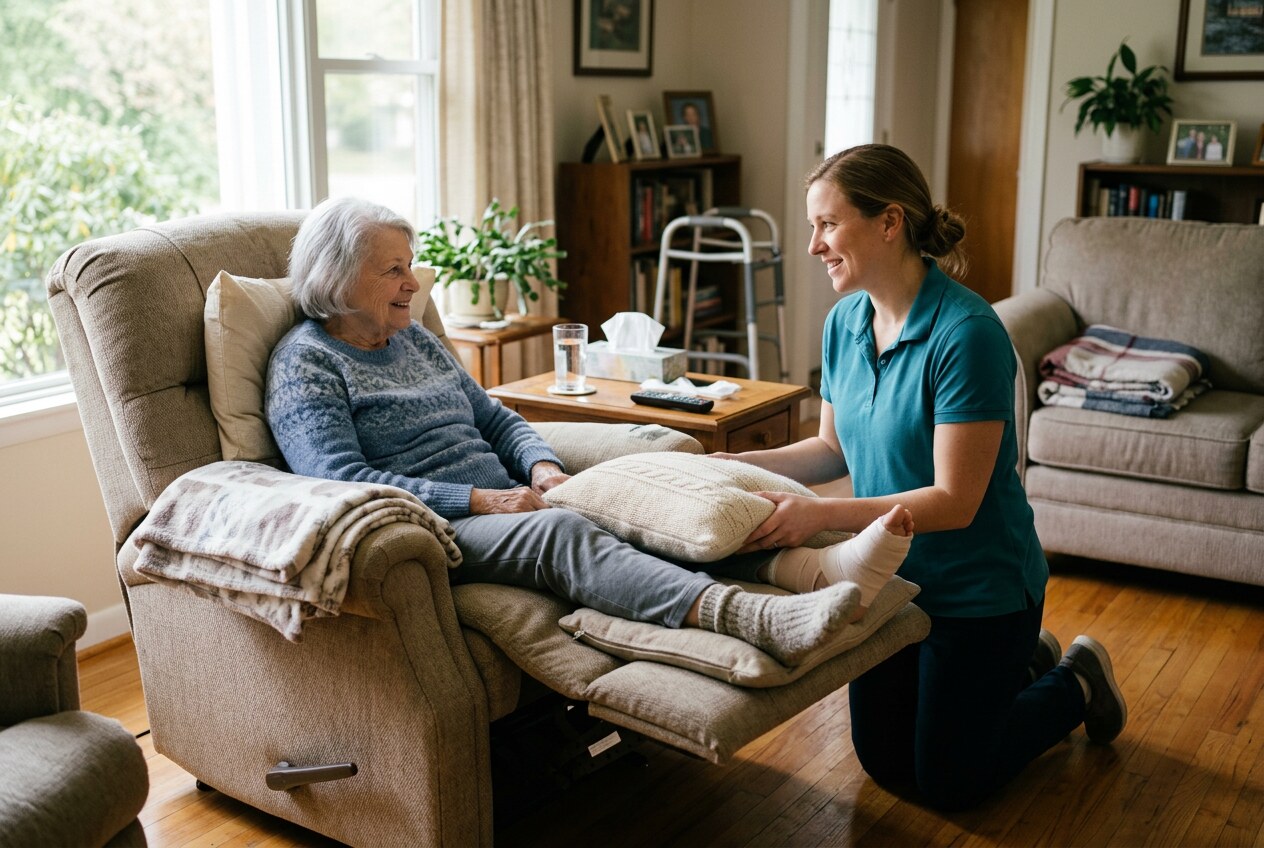
The first ten days home from hip, knee, cardiac, or abdominal surgery decide whether recovery stays on track or ends in a readmission. Our caregivers honor weight-bearing orders, run a fall-safe house, manage the pain log on schedule, and watch the surgical site so problems get caught early.
Why the First Ten Days Matter
Recovery isn't about effort — it's about following the plan exactly
Surgeons send patients home with a precise plan: weight-bearing status, pain medication taper, wound-care instructions, activity restrictions, and a follow-up schedule. The plan is conservative on purpose. The biggest risks in the first ten days are a fall, a missed early-infection sign, opioid grogginess that masks problems, and the family caregiver burning out by day four.
A trained caregiver in the home protects every one of those. We don't perform nursing tasks — sterile dressing changes, injectable anticoagulants, IV antibiotics belong to home health nursing. We provide the personal care, supervision, and observation around those tasks, plus the predictable respite that lets a spouse actually sleep.
Our Post-Surgery Approach
Six areas where the right caregiver prevents readmission
Every post-surgery plan covers these six areas, adapted to the procedure and the surgeon's specific discharge orders.
Surgical-Site & Wound Awareness
We don't perform sterile dressing changes — those are home health nursing tasks. We observe and report: redness, drainage, odor, fever, or wound edges opening. Early reporting prevents readmission.
Mobility, Weight-Bearing & Transfers
We follow the surgeon's weight-bearing orders to the letter — non-weight-bearing, toe-touch, partial, or full — and use the walker, crutches, or wheelchair exactly as PT trained.
Medication Reminders & Pain Management
We set up the pill organizer, remind on schedule, and watch the pain log so opioid weaning happens on the surgeon's plan — not by ear. We never administer or adjust dosing — that's a nursing task.
Fall Prevention in the First Two Weeks
The highest readmission risk after orthopedic surgery is a fall. We clear pathways, manage the rug-and-cord audit, lock the wheelchair brakes, and supervise every transfer through the brain-fog period.
Nutrition, Hydration & Bowel Routine
Surgery and anesthesia plus pain medication slow the gut. We push protein, fiber, and water on the schedule the discharge plan called for and report bowel patterns before they become problems.
Predictable Respite for the Spouse
Most recovery weight falls on a spouse who's already exhausted. We provide predictable respite blocks so the well partner can sleep, see their own doctor, or just step outside.
A Typical Recovery Day
What the first week home looks like with the right help
- 7:30 a.m. — caregiver arrives, helps the spouse hand off, supervises transfer to bedside commode with weight-bearing precautions.
- 8:00 a.m. — pain medication on schedule, surgical-site observation, pill organizer cross-checked against the discharge sheet.
- 9:00 a.m. — bathing with the wound protected per surgeon's instructions, dressing in adaptive clothing.
- 10:00 a.m. — gentle walk with walker on the path the PT cleared, vitals observation, rest in the recliner with leg elevated.
- 12:00 p.m. — protein-forward lunch, hydration push, second pain assessment logged.
- All shift — visit notes shared with family and home health nurse; any wound or vital sign change triggers a call before the shift ends.
Our Standard
Held to the 12-Mile Care Standard
Every post-surgery caregiver we send is held to the 12-Mile Care Standard. Skills are verified in real time by a Registered Nurse before the first shift — including weight-bearing transfer technique, walker progression, surgical-site observation, and pain-log discipline.
The 12-Mile Care StandardWhat it costs
Post-surgery home care pricing in Southeast Michigan
Post-surgery recovery care typically falls within the average Personal Care rate among home care companies in the greater Detroit area of $29 - $37/hr. If a complex orthopedic recovery requires two-person transfers or significant equipment, the plan moves to the Specialized Care range of $35 - $42/hr. For first-week round-the-clock coverage, live-in care is $400 - $500/day.
Run your exact schedule through our cost calculator or contact us for a free consultation.
FAQ