
Specialized Care
Chronic Condition Home Care
Heart failure, COPD, diabetes, Parkinson's, multiple sclerosis, and advanced frailty are managed at home far more often than in hospitals. Our caregivers run the daily routine that keeps things stable: medication on time, daily weight, the right meal, and the symptom watch that catches a flare early.
Why Daily Routines Matter
Chronic conditions are won or lost in the daily routine
Heart failure decompensates over three to seven days — and the warning signs are visible in the daily weight long before the breath gets short. COPD flares are preventable when the maintenance inhaler is used on schedule.
Diabetes complications trace back to skipped meals and missed glucose checks. The pattern is the same across conditions: a stable daily routine prevents the next hospital stay.
A trained caregiver in the home is who keeps that routine alive when the spouse is exhausted, the adult child is two hours away, and primary care visits are every ninety days. We don't diagnose, prescribe, or adjust — those are clinical decisions. We carry the routine, document what we see, and report the early signs so providers can act before the ER does.
Our Chronic Care Approach
Six areas where the daily routine prevents the next admission
Every chronic-condition plan we write covers these six areas, adapted to the conditions actually in the room.
Medication Routine & Adherence
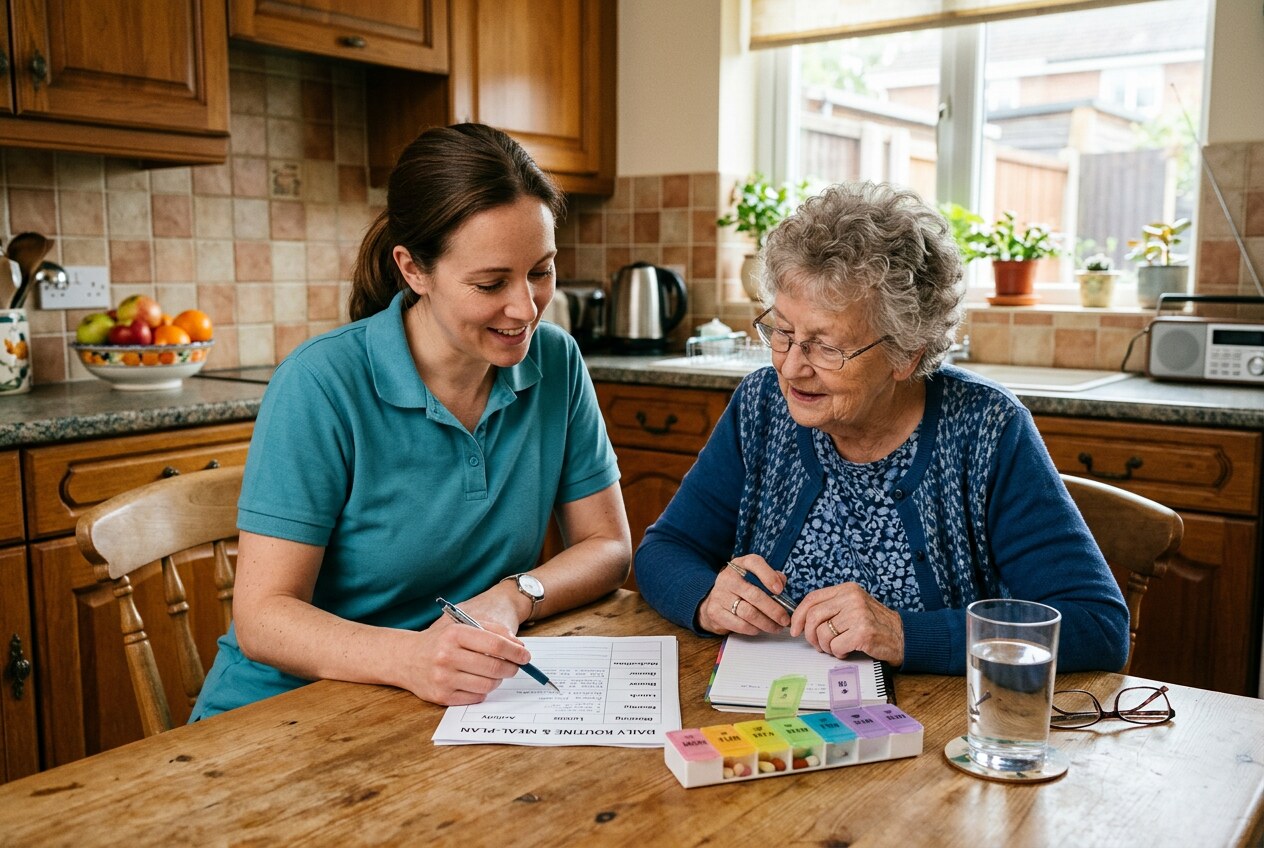
We assist the client as they set up the weekly pill organizer against the discharge med list — the client directs the organization and we help — then remind on the schedule the doctor wrote and document refusals or missed doses. We never adjust dosing or fill the organizer on our own — but we keep the routine that prevents the next hospitalization.
Heart Failure — Daily Weights, Sodium, Fluids
We log the daily weight, watch sodium in meals, track fluid restrictions if the cardiologist ordered them, and report a 2-3 pound jump in 24 hours — the early sign that a CHF admission is brewing.
Diabetes — Meals, Glucose Checks, Foot Care
We help with meal planning that matches the diabetic plate, remind for fingerstick glucose checks, log readings, and inspect feet every shift for the small wound that becomes the big problem.
COPD — Inhaler Routine, Pacing, Energy Conservation
We remind for the maintenance inhaler, pace activities to match the energy budget, watch oxygen saturation if the family has a pulse oximeter, and recognize the breathing pattern that means call the doctor today.
Nutrition, Hydration & Appetite
Many chronic conditions blunt appetite. We cook food the client actually wants to eat, push fluids on schedule, and document weight and intake patterns the family doesn't have time to notice.
Symptom Tracking & Early-Warning Reporting
Every shift produces notes the family can forward to primary care, cardiology, pulmonology, or endocrinology. The patterns we surface — gradual decline, new confusion, weight drift — let providers act before the next ER visit.
A Typical Day
What a stable chronic-condition day looks like
- 7:30 a.m. — caregiver arrives, daily weight on the same scale at the same time, morning medication on schedule, breakfast on the diabetic or cardiac plate.
- 9:00 a.m. — bathing with energy-conservation pacing, dressing, foot inspection for the diabetic patient.
- 11:00 a.m. — gentle activity matched to tolerance, hydration push, glucose check if scheduled.
- 12:30 p.m. — sodium-aware or carb-counted lunch, midday medication, rest.
- 3:00 p.m. — symptom check (breath, swelling, pain, fatigue), late-afternoon medication, simple activity.
- All shift — visit notes shared with family; weight gain, new edema, or oxygen-saturation drop triggers a call before the shift ends.
Our Standard
Held to the 12-Mile Care Standard
Every chronic-condition caregiver is held to the 12-Mile Care Standard. Skills are verified in real time by a Registered Nurse before the first shift — including medication-routine discipline, vital-sign technique with home equipment, fall prevention, and the symptom-watch pattern recognition that catches a flare early.
The 12-Mile Care StandardWhat it costs
Chronic condition home care pricing in Southeast Michigan
Companion-style daily check-ins for early-stage chronic conditions are billed at $27 - $32/hr. Hands-on chronic care that includes bathing, transfers, and ADL support is billed at Personal Care of $29 - $37/hr. For 24-hour situations, live-in care is $400 - $500/day.
FAQ