
A Room-by-Room Fall Prevention Walkthrough for Senior Homes
Last Reviewed by Austin Adair · April 2026
About one-third of seniors who fall once will fall again within a year. The second fall is statistically more dangerous than the first. Almost every fall traces back to a fixable home detail or a personal risk factor that a one-hour walkthrough can spot.
Bathroom
Where ~80% of in-home senior falls happen.
- Install grab bars next to the toilet and inside the shower. Suction cups are not enough.
- Add a non-slip mat inside the tub and a textured rug outside.
- Use a shower chair or transfer bench when balance is uncertain.
- Raise the toilet seat or add a riser with arms.
- Keep a night light on between bedroom and bathroom.
Bedroom
Most middle-of-the-night falls start here.
- Clear a 3-foot path from bed to bathroom. No throw rugs.
- Use a motion-sensor night light at the bedside.
- Keep a phone, water, and glasses within arm's reach.
- Consider a bed rail or grab bar mounted to the floor.
- Lower the bed if it sits high. Easier to enter and exit.
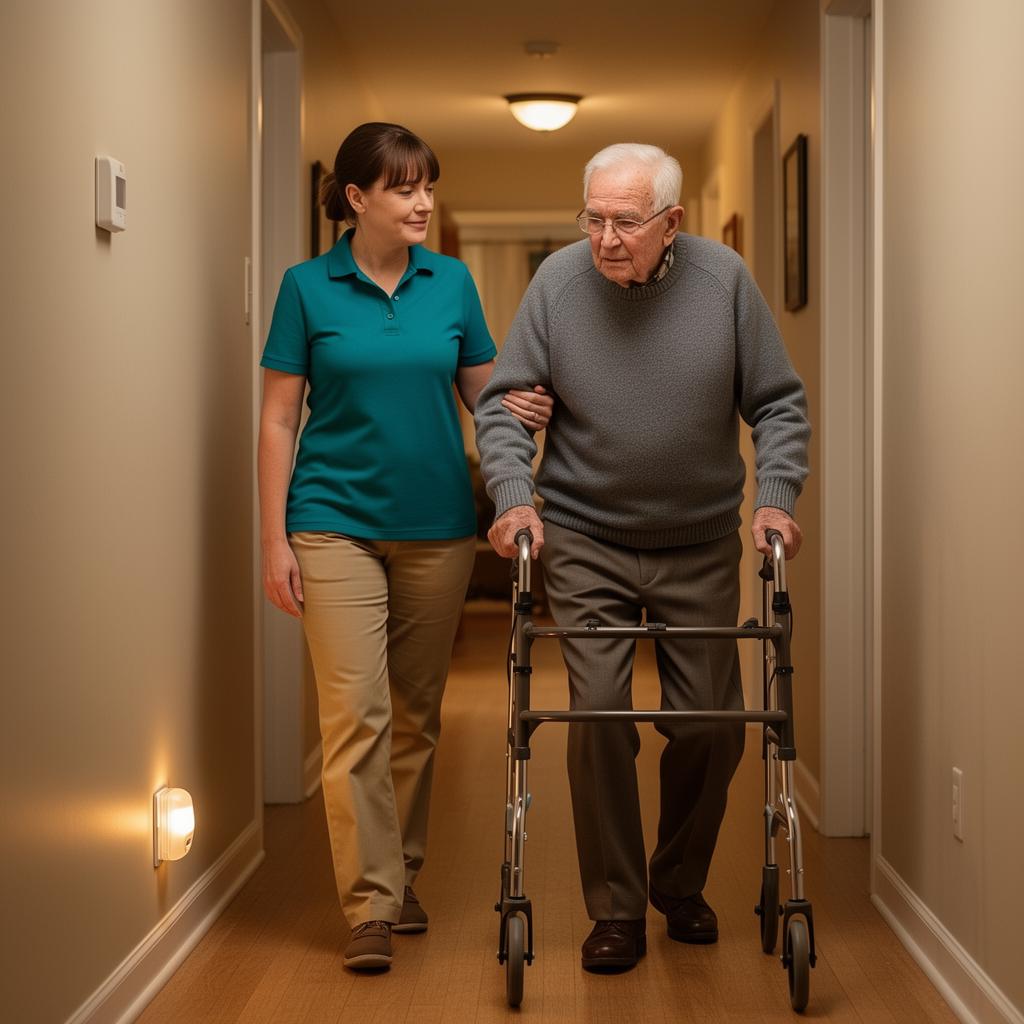
Living Areas & Hallways
Tripping hazards are usually obvious in hindsight.
- Remove every throw rug. They cause more falls than icy sidewalks.
- Tape down or reroute any electrical cords.
- Make sure walking paths are wide enough for a walker (32 inches).
- Replace low-watt bulbs with bright LEDs in every hallway.
- Add contrast tape to step edges if there is a sunken room.
Kitchen
Reaching and standing for long periods.
- Move daily-use items between waist and shoulder height.
- Use a sturdy step stool with a handle. Never a chair.
- Add a non-slip mat at the sink.
- Keep a stool nearby for tasks that take longer than 5 minutes.
- Install a faucet with lever handles if grip is weak.
Stairs & Entryways
A single missed step changes a life.
- Sturdy handrails on both sides of any indoor staircase.
- Bright, contrasting tape on the first and last step edges.
- A bench or chair near the front door for putting on shoes.
- Outdoor lighting on the path to the car and mailbox.
- Salt and shovel routines for winter — schedule them, do not assume.
Personal Risk Factors — Outside the Home Environment
Personal fall-risk factors that no home modification can eliminate include medications that cause dizziness or low blood pressure, vision changes, muscle weakness from inactivity, balance disorders, cognitive decline that impairs judgment, dehydration, and unaddressed foot problems. Managing these usually requires a physician visit and a home-care safety plan.
Vision check at least once a year. Outdated prescriptions cause falls.
Hearing check. Balance and hearing share inner-ear pathways.
Medication review with the pharmacist. Some combinations cause dizziness.
Strength + balance exercises (Tai Chi, sit-to-stand, heel-toe walks).
Footwear with low heels and non-slip soles. No socks on hardwood.
Hydration. Dehydration causes more dizziness in seniors than most assume.
FAQ